I used to think that a “highly educated society” meant a place where everyone spoke with sophisticated, hyper-formal accents, quoted classic literature over coffee, and walked around with prestigious, leather-bound PhD dissertations under their arms. I imagined a small, exclusive elite sitting in ancient university library halls.
Then, a few years ago, I spent a few weeks collaborating remotely with a digital development and design agency based out of Vancouver, Canada. Over the course of our project calls, I noticed something fascinating. It didn’t matter if I was speaking to the senior project architect, the junior front-end developer, the copywriter, or even the community manager handling their basic outreach—every single person on the team possessed an incredibly sharp, structured method of breaking down complex analytical problems.
Curious, I started looking into global education demographics on the OECD (Organization for Economic Co-operation and Development) databases. What I discovered completely shifted my perspective on what modern, world-class education actually looks like.
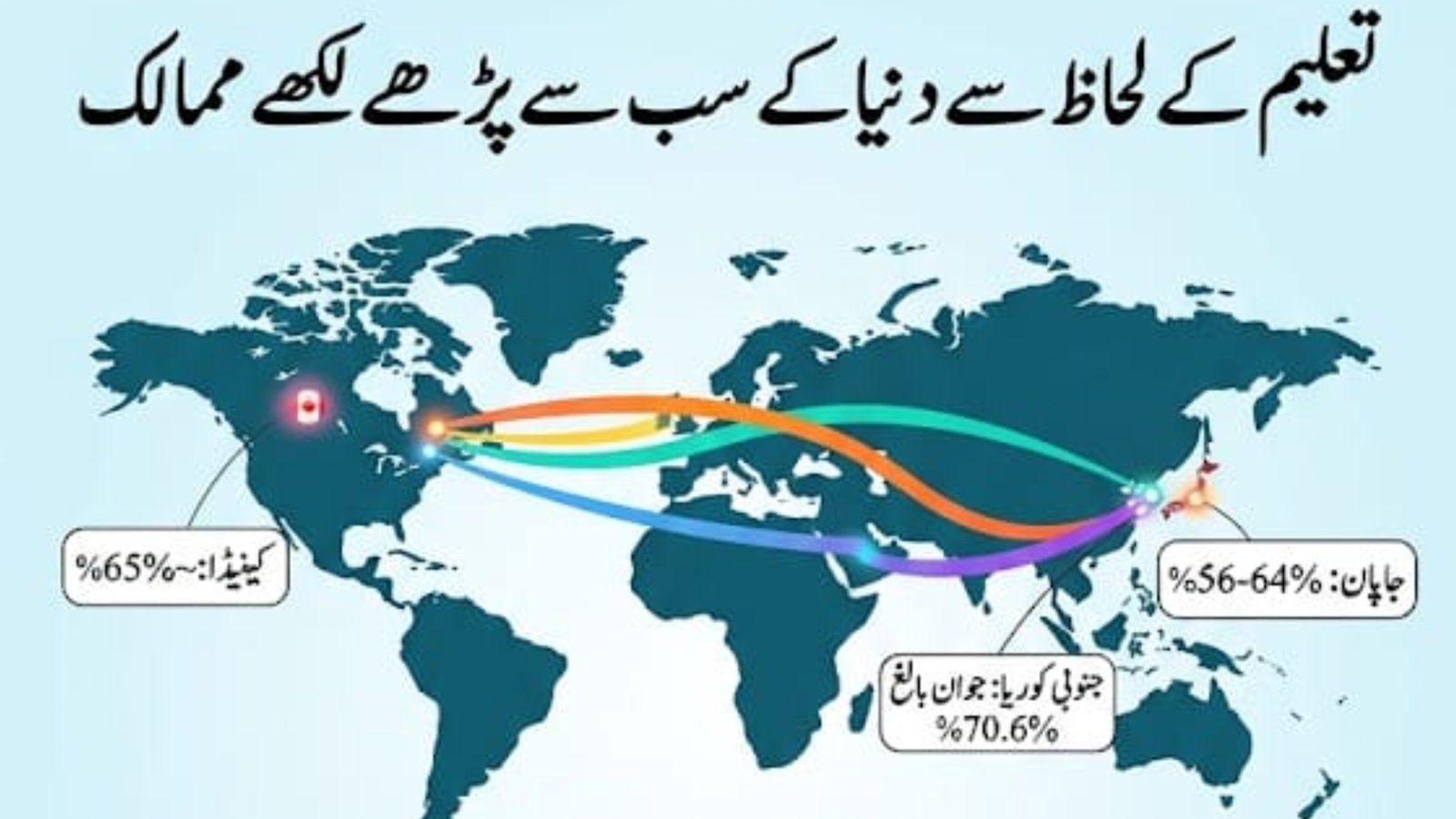
It turns out that Canada consistently ranks as the absolute most educated country in the world when looking at the percentage of the adult population holding a tertiary (post-secondary) degree, with roughly 63% to 65% of its working-age adults holding a college or university qualification. Furthermore, if you look at the younger, upcoming workforce (ages 25 to 34), countries like South Korea hit an astonishing 70.6% attainment rate.
But analyzing global academic metrics isn’t just a fun piece of trivia for a blog post. As digital creators, students, or web developers, understanding how these global powerhouses structure their educational systems gives us a literal blueprint for how we should be training ourselves, setting up modern career pathways, and optimizing our own intellectual growth.
Let’s dive beneath the surface of the official global rankings, explore what makes an entire society world-class in terms of learning, and look at the practical lessons we can steal from them to upgrade our own skills.
The Global Leaderboard: Who Rules the Class?
When global organizations like the OECD measure how “educated” a country is, they don’t look at literacy rates (the ability to read and write), because most developed nations achieved near-100% literacy decades ago. Instead, they look at Tertiary Education Attainment—the percentage of people between the ages of 25 and 64 who have completed some form of higher education, whether that is a university bachelor’s degree, a master’s program, or a specialized technical college diploma.
Here is how the real-world top tier stacks up based on the latest verified global data trackers:
1. Canada (~65% Tertiary Attainment)
Canada takes the crown not because it only churns out elite university professors, but because it treats higher education as a broad, public infrastructure. A massive pillar of Canada’s success is its highly advanced, fully integrated community college and vocational sector. Instead of forcing every student down a rigid, theoretical academic path, their system allows individuals to seamlessly acquire high-level, practical technical certifications that are directly tied to what the modern job market demands.
2. Japan (~56% to 64% depending on age cohort)
Japan’s position at the top of global lists is driven by an intense, culturally embedded commitment to systematic learning. In Japan, completing higher education or entering an advanced technical training framework isn’t an exceptional choice for a select few—it is a baseline societal expectation.
3. South Korea (70.6% among Young Adults)
While Canada leads across the entire working-age population, South Korea is an absolute juggernaut when you isolate the younger generation (ages 25 to 34). Over 70% of young Korean adults hold a tertiary qualification. This is the result of a relentless national drive that view education as the ultimate engine for social mobility and high-tech economic development.
The Real Lesson: It’s About Systems, Not Just Prestige
For the longest time, I fell into a classic mental trap: I assumed that the “best” education system was simply the one with the most famous, ultra-expensive, elite universities. I thought of places where only the top 1% could afford to pass through the gates.
But the data from Canada and South Korea proves that a world-class educational ecosystem functions like an upside-down pyramid:
               [ The Global Education Models ]
                              │
               ┌──────────────┴──────────────┐
               ▼                             ▼
     [ The Elite Trap ]            [ The Modern System ]
 - Relies on a few famous,       - Focuses on massive public
   ultra-expensive schools.        accessibility.
 - High cost creates barriers.   - Integrates vocational college
 - Small percentage graduates.     with university tracks.
The most educated countries focus heavily on accessibility, practical skill integration, and alternative pathways.
In Canada, for example, short-cycle tertiary credentials (like a two-year specialized software engineering or applied chemistry diploma) are valued just as highly by corporate recruiters as a traditional four-year bachelor’s degree. They have successfully stripped away the unnecessary snobbery around vocational training, making it incredibly easy for a regular student to exit high school, gain a high-earning technical skill, and enter the economic system without drowning in lifetime student debt.
Step-by-Step: How to Build Your Own World-Class Learning Framework
You don’t need to Pack up your life and migrate to Vancouver or Seoul to benefit from a world-class educational mindset. By studying how these top-tier systems function, we can build a personalized, highly efficient learning routine using modern web tools. Here is the exact strategy I use to master complex technical concepts from my own desk:
Step 1: Embrace “Modular” Learning (The Canadian College Model)
Stop trying to learn massive, broad subjects all at once. Instead of saying “I want to learn computer science,” break it down into tiny, highly practical, employable modules. Use platforms like Coursera, edX, or Udemy to earn micro-credentials in specific, actionable tasks—like database architecture, search engine optimization, or automated data pipelines.
Step 2: Leverage Open Academic Repositories
The world’s highest-level educational data is completely out in the open if you know where to look. Instead of relying on random, superficial blog summaries or social media threads, go directly to the source. Use tools like Google Scholar or university open-courseware platforms (like MIT OpenCourseWare) to study peer-reviewed, foundational data points.
Step 3: Implement Systematic Revision (The South Korean Approach)
Acquiring information is completely useless if you don’t retain it. Set up a digital system for systematic tracking and spaced repetition. Use flashcard apps like Anki or structured workspace tools like Notion to build a personal “Knowledge Base.” Review your core concepts on a fixed schedule (1 day, 7 days, 30 days) to lock the technical insights into your long-term memory.
Common Pitfalls to Avoid in Modern Education
Whether you are pursuing a formal university pathway or building your skills independently as a self-taught digital entrepreneur, watch out for these massive strategic mistakes:
- Confusing Degrees with Marketable Skills: Holding a piece of paper that says you completed a course doesn’t mean you can solve a real-world problem for a client or an employer. A world-class student focuses on building a visible, tangible portfolio of work alongside their credentials.
- The Academic Debt Trap: Spending tens of thousands of dollars on generic, non-specialized degrees without a clear, mathematical understanding of your expected return on investment (ROI) is a recipe for financial stress. Always audit the real-world employment data of a program before signing the enrollment paperwork.
- Assuming Learning Stops at Graduation: In a fast-moving, technology-driven global marketplace, your knowledge has a shelf-life. The moment you stop actively upskilling, your platform or your career profile begins to depreciate. True world-class operators view learning as a permanent, daily operational habit.
Final Thoughts
Looking at the world’s most educated countries teaches us a vital lesson: a society doesn’t become smart by accident. It happens through deliberate, structured systems designed to make high-level knowledge accessible, practical, and deeply integrated into daily life.
True education isn’t about memorizing ancient facts to pass an exam or collecting a wall full of framed certificates just for show. It is about sharpening your mind so you can look at a chaotic, complex global landscape, identify a structural problem, and build a clean, logical system to solve it.
Stop viewing high-level learning as an exclusive privilege reserved for someone else. Build your tech stack, access the wealth of open-source knowledge available at your fingertips, structure your daily learning modules, and start building your own world-class intellectual framework today!
Leave a Reply