
used to think that “world-class business” was a phrase reserved exclusively for people who went to Ivy League universities, wore tailor-made suits, and sat in sleek glass boardrooms in New York or London. I thought you needed a multi-million dollar venture capital check just to enter the conversation.
Then, a few years ago, I launched a digital marketplace. I had spent months meticulously planning the rollout, designing what I thought was an flawless operational blueprint, and building out a complex infrastructure. I expected it to run like a finely tuned Swiss watch.
Instead, within forty-eight hours of going live, everything that could break, broke. Our payment processing gateway glitched, our communication tracking fell apart, and a sudden influx of technical support tickets completely overwhelmed my inbox. I was working eighteen-hour days, fueled entirely by caffeine and sheer panic, desperately trying to keep the platform from collapsing under its own weight.
That chaotic reality check taught me a massive, unforgettable lesson: true, world-class business isn’t a status you buy with an expensive degree or a fancy office. It is a philosophy of extreme efficiency, relentless simplification, and an obsession with user value.
Whether you are launching a global e-commerce brand from your bedroom, running a highly specialized digital content platform, or setting up a niche local marketplace to trade digital assets, the core principles of operating at the highest level remain identical. Let’s look at what it actually means to run a world-class business from a practical, real-world perspective.

1. The Core Pillar: Building Systems, Not Just Working Hard
When most people start a business, they fall into the “hustle trap.” They think that if they just work fourteen hours a day and manually handle every single detail themselves, they will succeed.
I made this mistake for a long time. I was manually answering every customer email, tracking financial metrics on messy spreadsheets, and handling minor website updates. I didn’t own a business; I had just built a highly stressful job where I was the only employee.
World-class businesses operate on systems. A system is a repeatable process that can run smoothly whether you are sitting at your desk or sleeping on a beach.
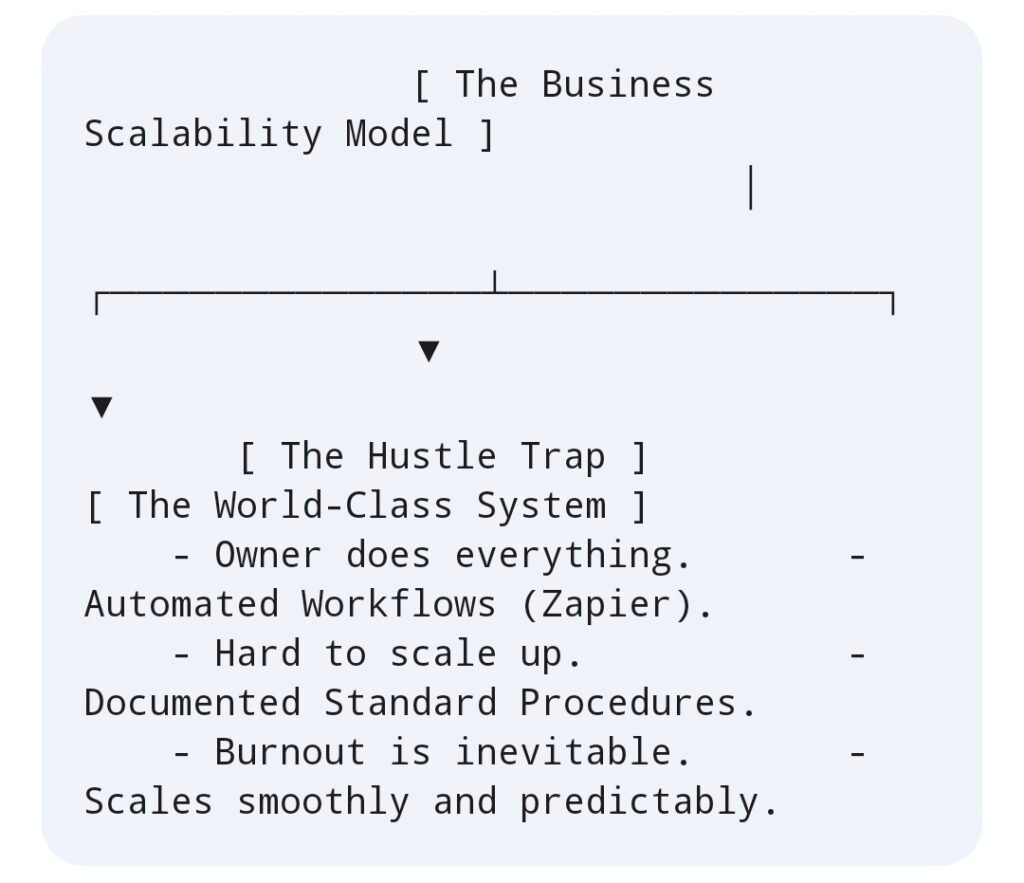
To transition your mindset to a global standard, you need to start auditing your daily actions. Ask yourself: “What task am I doing manually right now that can be automated, delegated, or standardized?”
If you are managing content or processing user data, use tools like Zapier or Make to link your applications together. For example, when a user fills out a contact form, the data should automatically populate your CRM database and trigger a standardized, helpful onboarding email without you lifting a finger. If a process cannot be automated, document it step-by-step so that anyone you hire down the line can execute it perfectly.
2. Navigating the Market Validation Phase
Another massive realization I had over the years is that world-class businesses never guess what the market wants—they let the market tell them.
Before committing thousands of dollars or months of development time to a new venture, you have to find out if there is a real, measurable demand for your solution. The best way to do this is by creating a Minimum Viable Product (MVP) and launching a “smoke test.”
A Real-World Scenario: Let’s say you want to build an online community platform for people buying and selling specialized web properties or digital assets. Don’t spend months hiring developers to build a custom application. Instead, set up a simple, secure group on a platform like WhatsApp or Discord. Invite a small group of trusted individuals, facilitate a few real transactions manually, and observe their behavior.
This low-cost approach gives you instant, unfiltered feedback. You will learn what features your users actually care about, what their security concerns are, and how much they are willing to pay for a premium experience. If the concept works in a simple WhatsApp group, you have the proof you need to scale it into a full-scale web platform. If it fails, you’ve lost next to nothing.
3. The Technical Foundation of Digital Authority
If your business has an online presence—which almost every modern business does—your digital infrastructure is your storefront. You cannot build a world-class brand on a shaky, unreliable foundation.
When I first started managing web platforms, I cut corners. I picked the cheapest shared hosting providers, ignored search engine optimization (SEO) configurations, and used bulky, unoptimized themes. As a result, my sites loaded slowly, glitched during peak traffic hours, and failed to rank on search engines.
To compete globally, you need to optimize your tech stack ruthlessly:
- Hosting Infrastructure: Use reliable, high-performance hosting environments like Hostinger, Cloudways, or dedicated cloud servers. A one-second delay in page loading speed can tank your user retention rates and destroy your ad conversion metrics.
- Search Engine Optimization (SEO): If you are utilizing WordPress to drive traffic, don’t rely on guesswork. Implement advanced optimization suites like Rank Math SEO to structure your schema data, track keyword performance, and audit your site’s technical health regularly.
- Clean Architecture: Keep your user interface exceptionally clean and functional. Ensure your mandatory policy frameworks (Privacy Policies, Terms and Conditions, and Disclaimers) are highly visible in your footer to build trust with search engine crawlers and advertising networks alike.
4. Financial Discipline: The Lifeblood of Survival
You can have the most innovative product on earth and a beautiful web layout, but if your cash flow management is messy, your business will die.
In my early ventures, I mixed my personal expenses with my business revenues. I didn’t track my exact customer acquisition costs, and I had no idea what my actual profit margins were after accounting for software subscriptions, domain renewals, and transaction fees. It made tax preparation a nightmare and stunted my ability to scale up.
Operating at a world-class standard means maintaining absolute financial clarity from day one:
- Separate Your Capital: Open a dedicated bank account exclusively for your business operations. Never mix personal funds with platform revenue.
- Understand Your Unit Economics: You must know exactly how much it costs you to acquire a single user or customer, and what the lifetime value of that customer is. If you spend $5 in advertising to acquire a user who only generates $2 in long-term revenue, your model is fundamentally broken.
- Keep Fixed Costs Low: Don’t subscribe to premium, high-tier software tools before your volume requires them. Use free tiers, open-source alternatives, and basic setups until your growing revenue naturally demands an upgrade.
Common Strategic Mistakes to Avoid
Throughout my journey, I have watched brilliant entrepreneurs fail because they fell into predictable strategic traps. Keep these top of mind as you build your venture:
- Chasing the Hype: It is easy to get distracted by flashy new trends, whether it’s an overnight e-commerce fad or a highly volatile financial market asset. World-class businesses focus on solving evergreen, structural problems that will still exist five or ten years from now.
- Analysis Paralysis: Spending weeks debating minor design elements, like the exact shade of blue for your brand logo, is just a subconscious way of hiding from the market because you are afraid to launch. Launch with a clean, basic layout, gather real data, and iterate as you grow.
- Ignoring User Feedback: The moment you stop listening to the complaints and suggestions of your core users is the moment your competitors win. Treat every customer support ticket or critical email as a valuable diagnostic report showing you exactly where your business system needs repair.
Final Thoughts
Achieving a world-class standard in business isn’t a destination you arrive at overnight—it is a continuous habit of optimization. It is about waking up every day and looking for ways to make your workflows 1% faster, your content 1% more accurate, and your customer experience 1% smoother.
Stop waiting for the perfect market conditions, stop worrying about what resources you lack, and stop overcomplicating your business model. Identify a specific problem, build a clean, systemic framework to solve it, and launch it into the real world. True business mastery is learned in the trenches, through execution, adjustments, and resilience. Take that first step, hit publish on your ideas, and start building your system today
Leave a Reply