A few years ago, I sat down with a friend at a local dhabba over a steaming cup of doodh patti. He had just left his corporate job and was desperate to start something of his own. He looked at me and asked the exact question you’re probably asking right now: “What is the best business to start in Pakistan?”
At the time, I gave him the typical, textbook answer: “Open an e-commerce store or get into real estate.” He took that advice, dumped a massive chunk of his savings into buying bulk inventory of trendy clothing, built a fancy website, and waited.
Six months later, he was sitting on boxes of unsold shirts, struggling to pay his basic bills, and drowning in Facebook ad debt.
That was a massive reality check for me. In Pakistan, the “best” business isn’t the one that looks coolest on Instagram or the one that a self-proclaimed guru is hyping up on YouTube. The best business is the one that solves a hyper-local, painful problem, handles our unique economic realities (like crazy inflation and fluctuating fuel prices), and matches your specific skillset.
Having spent years navigating the digital and local business ecosystem here—celebrating some wins and taking some heavy losses along the way—I want to give you an honest, unfiltered look at what actually works in Pakistan right now.
The Harsh Reality of the Pakistani Market
Before we look at specific business models, let’s clear the air. If someone tells you a business is “guaranteed to succeed” or offers “passive, risk-free income” in Pakistan, change the channel.
Running a business here means dealing with sudden internet disruptions, unexpected electricity bills, courier cash-on-delivery (COD) delays, and customers who change their minds at the last second.
To survive and actually make a profit, you need a business that has two things:
- Low overhead costs: You shouldn’t be drowning in heavy monthly rents before making your first sale.
- High margins or high necessity: People must either desperately need what you sell, or you should be earning in a currency stronger than the rupee while keeping your expenses local.
Based on real-world data, observations, and personal trials, let’s break down the actual top business sectors in Pakistan that fit these criteria.
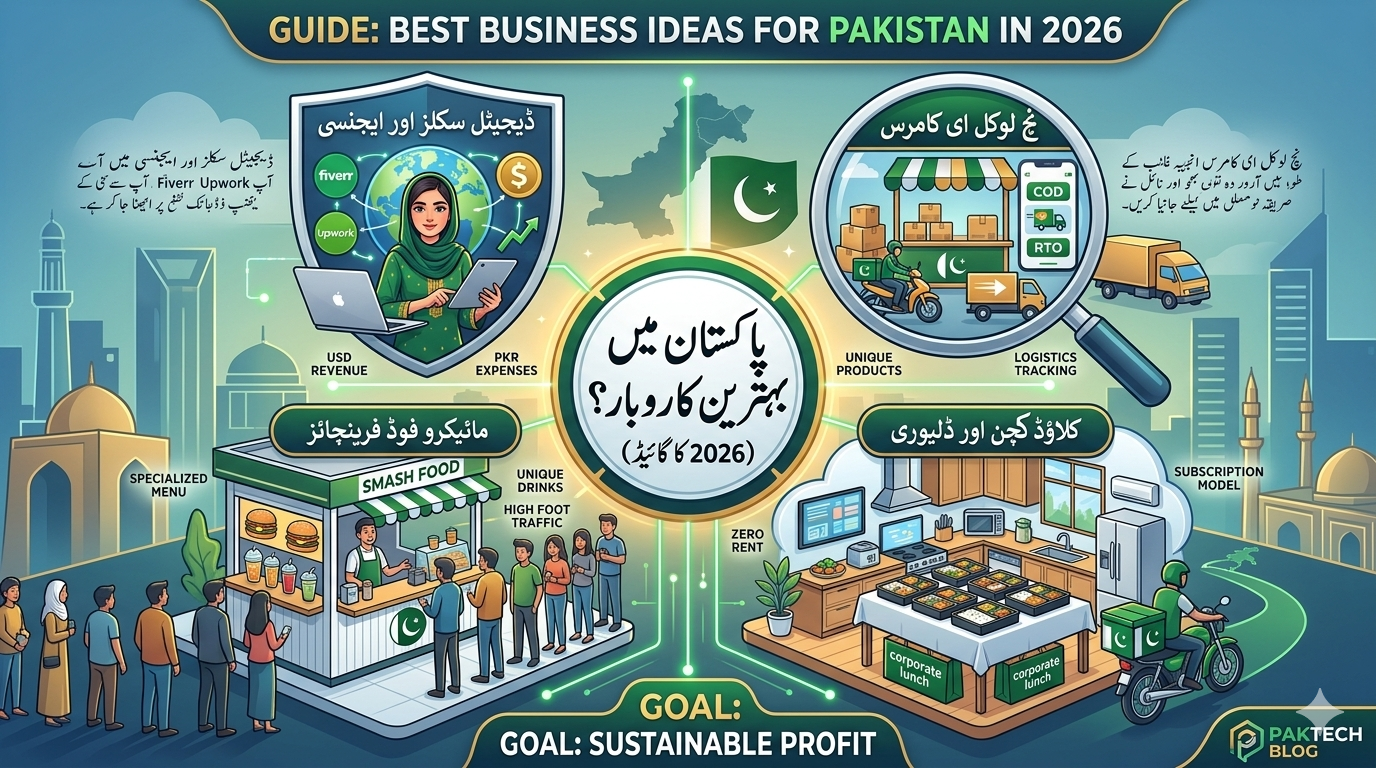
1. The Digital Export Model: Freelancing Agencies & Niche Blogging
If you ask me what the absolute best business model is for a young Pakistani today, it is selling your skills or content to the global market. Why? Because your expenses are in Pakistani Rupees (PKR), but your revenue is in US Dollars (USD). When the dollar fluctuates, it actually works in your favor.
Instead of just working as an isolated freelancer on Fiverr or Upwork, the real business transition happens when you build an agency or a content platform.
How It Works in Practice
Instead of being a lone writer, designer, or web developer, you build a small, agile team. You hunt for international clients using LinkedIn, cold emailing, or platform bidding, and your team executes the work.
Alternatively, you build niche informational websites (blogs) that solve specific problems for a global audience, driving traffic that you can monetize through premium ad setups or affiliate marketing.
Real Lessons Learned
When I first started managing web platforms and creating content, I made the classic mistake of trying to cover everything. I thought, “If I write about tech, health, and sports all at once, I’ll get more views.” It failed miserably.
The turning point came when I narrowed down into hyper-specific niches—like deep technical troubleshooting or incredibly focused historical research. The moment you become a specialist, your authority shoots up, search engines trust you more, and your monetization capability skyrockets.
2. Targeted Local E-Commerce (The Hyper-Local Angle)
Everyone and their cousin is trying to do e-commerce in Pakistan. Most people fail because they try to source random, generic items from Shah Alam Market or Bolton Market and sell them nationwide via general Shopify stores. The shipping costs eat up their margins, and the return rates (RTOs) destroy their cash flow.
The e-commerce models that are quietly making massive profits right now are niche-focused and utilize local strengths.
[Generic Dropshipping] ----> High Returns, Low Trust, Failed Margins
[Hyper-Local Niche]    ----> Brand Loyalty, Lower Shipping Costs, Sustainable Profit
Real Example
Instead of selling generic shoes, focus entirely on high-quality, handmade traditional footwear (like Peshawari chappals) sourced directly from local artisans in places like Charsadda or Peshawar. By taking professional, clean photography, focusing on premium packaging, and targeting a specific urban audience in Lahore, Karachi, and Islamabad, you create a brand, not just a commodity.
Step-by-Step Guidance to Launch Right
- Step 1: Validate Demand Locally: Before ordering bulk inventory, create a basic social media page (Instagram/Facebook) and run a tiny engagement ad with a small budget (maybe 1,000 to 2,000 PKR). See if people are actually clicking and sending messages asking for the price.
- Step 2: Secure a Reliable Courier Partner: Do not rely on just one courier. Set up accounts with multiple logistics companies (like Leopards, Trax, or TCS) and look closely at their COD clearance cycles. Cash flow is oxygen for e-commerce.
- Step 3: Account for the Return Rate: In Pakistan, 15% to 25% of COD orders will come back rejected because the customer wasn’t home, changed their mind, or the rider didn’t reach them. When calculating your product pricing, always build this hidden cost into your margins.
3. The Food & Beverage Micro-Franchise
People in Pakistan love to eat. No matter how tough the economy gets, the food business rarely shuts down. However, opening a massive, high-end cafe requires millions in capital and comes with immense risk.
The smart play right now is the micro-franchise or specialized cloud kitchen model.
Practical Scenario
Look at the explosion of specialized fries spots, unique tea stalls, or smash burger setups in small, high-foot-traffic kiosks. They don’t offer a 50-item menu. They do one thing, they do it incredibly fast, and they make it highly shareable on social media. Alternatively, running a clean, home-based cloud kitchen that sells premium, hygienic lunch boxes to corporate offices via platforms like Foodpanda or direct WhatsApp subscriptions is proving incredibly lucrative with zero commercial rent.
Common Mistakes That Will Tank Your Business
If you want to keep your business alive past its first year in Pakistan, avoid these classic traps:
- Relying on Verbally Agreed Partnerships: Never start a business with a friend or relative based purely on a handshake. When money starts coming in—or when losses happen—memories get foggy. Write everything down on a legal stamp paper. Define who owns what, who does what, and how profits are split.
- Ignoring the Cash Reserve: Many new founders spend 100% of their capital on day one (buying stock, interior design, or premium tools). They leave nothing for marketing or survival. You must have at least 3 to 6 months of operational expenses kept safely in a bank account (like a standard business account with NBP, HBL, or Alfalah) that you do not touch.
- Blaming the System Instead of Adapting: Yes, internet blocks and inflation are frustrating. But the successful businesses are the ones that adapt. If the internet goes down, do you have a backup data connection? If your product costs go up, have you improved your brand packaging so you can confidently charge a higher premium?
My Honest Opinion: Which One Should You Choose?
If you have virtually zero capital but possess a laptop, a decent internet connection, and time to learn, the best business is building a digital asset. Whether that is an agency providing high-ticket services to foreign businesses or creating highly optimized, authoritative informational sites that generate ad revenue, the entry barrier is incredibly low, and the upside is entirely in foreign currency.
On the other hand, if you have a bit of capital to deploy and want something tangible, look for a niche local e-commerce brand or a high-volume micro-food concept.
Don’t chase a business model just because you saw someone flashing a luxury car on TikTok claiming they made millions overnight. The best business in Pakistan is the one that allows you to sleep peacefully at night because your operational costs are low, your margins are healthy, and you are providing genuine value to a customer who is happy to pay you for it.
Pick one lane, commit to it for at least nine months without looking left or right, and build it brick by brick.
Leave a Reply